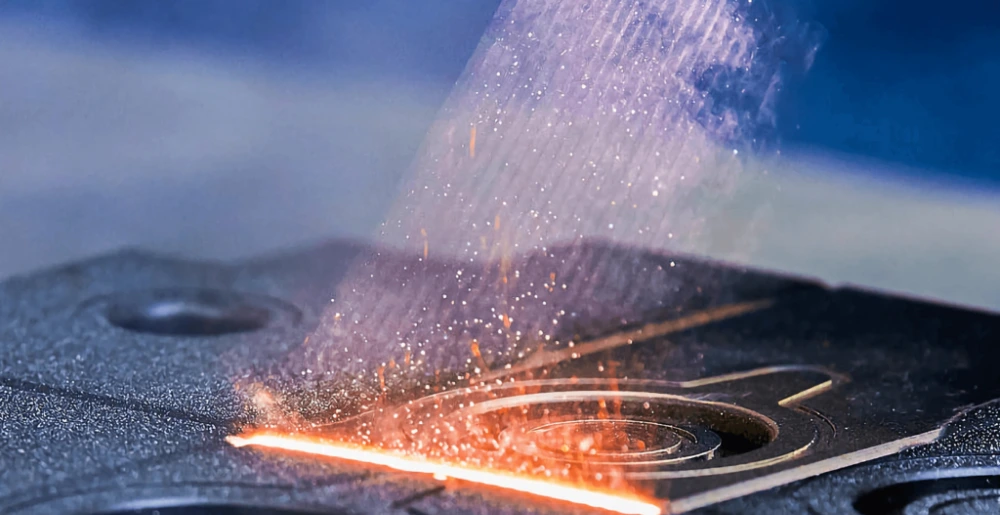
Laser cleaning technology’s core advantage lies in “precision control”—but only with the right laser type and process parameters can you achieve the dual goals of efficient contaminant removal and zero substrate damage. The effectiveness, efficiency, and safety of laser cleaning depend entirely on the optimal combination of key parameters: wavelength, pulse width, fluence, repetition rate, and scan speed. These variables directly determine how laser energy is delivered, its intensity, and the system’s ability to distinguish between contaminants and the base material.
This guide breaks down the selection logic of core laser cleaning parameters, combined with real industrial application scenarios, helping businesses and practitioners accurately match the best parameter combinations based on material type, contaminant characteristics, and surface requirements—maximizing the cost-effectiveness of laser cleaning.
Core Parameter: Wavelength – Targeted Energy Absorption
Wavelength defines the energy level of the laser beam (corresponding to different spectral regions) and directly impacts the absorption efficiency of laser energy by both the substrate and contaminants. It is the key to achieving “selective cleaning.”
Common Wavelengths & Application Scenarios
- Infrared (1064nm, Nd:YAG or Fiber Lasers): The mainstream wavelength for industrial cleaning, offering excellent absorption for metals and metal oxides (e.g., rust, mill scale). Contaminants (such as Fe₂O₃) absorb far more energy than substrates (e.g., carbon steel, stainless steel), enabling rapid contaminant removal without damaging metal surfaces. Ideal for rust removal, weld slag cleaning in mechanical manufacturing, auto parts, and steel structures.
- Green (532nm): Delivers better absorption for certain paints, polymers, and printed circuit board (PCB) coatings. Suitable for paint stripping on plastic surfaces, coating removal from electronic components, and cleaning of precision instrument casings—especially for non-metallic materials sensitive to thermal damage.
- Ultraviolet (355nm, Excimer Lasers): Designed specifically for organic materials, thin films, and delicate surfaces. With concentrated energy and low penetration, it can precisely remove organic contaminants from paper and cultural relics, thin adhesive layers on electronic components, and printed labels on plastic parts. The top choice for heritage restoration and electronics manufacturing.
Core Selection Principle
Prioritize wavelengths with high absorption by contaminants and low absorption by the substrate. This ensures laser energy focuses on contaminants, achieving “cleaning without substrate damage.” For example, choose 1064nm infrared for rust removal on carbon steel, and 355nm ultraviolet for organic residue cleaning on electronic components.
Core Parameter: Pulse Width (Pulse Duration) – Speed of Energy Delivery
Pulse width refers to the duration of a single laser pulse, typically measured in nanoseconds (ns), picoseconds (ps), or femtoseconds (fs). It determines the rate of laser energy release and directly influences the risk of thermal damage to the substrate.
Characteristics & Applications of Different Pulse Widths
Pulse width refers to the duration of a single laser pulse, typically measured in nanoseconds (ns), picoseconds (ps), or femtoseconds (fs). It determines the rate of laser energy release and directly influences the risk of thermal damage to the substrate.
- Nanosecond Lasers (ns): The most widely used type in industry, with pulse durations of 1–100ns. Delivers high energy transfer efficiency, enabling rapid removal of common contaminants such as rust, paint, and mill scale. Suitable for large-scale industrial cleaning (e.g., rust removal on steel structures, paint stripping on ship hulls) but may cause slight thermal effects—parameter control is required to avoid overheating thin materials.
- Picosecond Lasers (ps): Features faster energy release (pulse durations of 1–1000ps) and minimal heat transfer to the substrate, resulting in an extremely small heat-affected zone (HAZ). Ideal for precision component cleaning (e.g., aerospace parts, medical devices) and cleaning of highly reflective metals (e.g., copper, aluminum), balancing efficiency and precision.
- Femtosecond Lasers (fs): Ultra-short pulses (10⁻¹⁵ second range) create a “cold ablation” effect with almost no heat conduction, completely avoiding substrate damage. Specifically designed for heat-sensitive materials (e.g., plastics, glass), micro-scale surfaces (e.g., semiconductor chips), and heritage restoration— the preferred choice for high-end precision cleaning.
Core Selection Principle
The poorer the thermal stability of the material and the higher the surface precision requirements, the shorter the pulse width should be. For example, use nanosecond lasers for rust removal on ordinary carbon steel, and femtosecond lasers for cleaning semiconductor components.
Core Parameter: Fluence (Energy Density) – Intensity of Contaminant Removal
Fluence refers to the energy delivered per unit area per pulse (unit: J/cm²), the most critical parameter for cleaning effectiveness. It directly determines whether the bond strength of contaminants can be broken.
Fluence Levels & Application Scenarios
Laser cleaning is not a “one-size-fits-all” process—it requires engineering precision to tune parameters based on specific needs:
- Low Fluence (<1 J/cm²): Only removes lightly adhered contaminants (e.g., dust, surface rust, thin oil films). Suitable for mild cleaning of precision instrument surfaces to avoid substrate damage.
- Moderate Fluence (1–5 J/cm²): Adaptable to most industrial scenarios, efficiently removing common contaminants such as rust, mill scale, regular paint, and flux residues. The “universal range” balancing efficiency and safety.
- High Fluence (>5 J/cm²): Required for thick, stubborn contaminants (e.g., thick paint layers, heavy rust, high-temperature mill scale), as sufficient energy is needed to break contaminant bonds. Strict range control is essential to avoid exceeding the substrate’s damage threshold (e.g., low-melting materials like aluminum alloys and plastics are prone to melting).
Core Selection Principle
Target a fluence that just exceeds the contaminant’s ablation threshold without surpassing the substrate’s damage threshold. For example, use 2 J/cm² for thin paint removal, and increase to 6–8 J/cm² for thick rust layers—paired with short pulse widths to reduce thermal damage.
Core Parameter: Repetition Rate – Balancing Efficiency & Thermal Load
Repetition rate refers to the number of laser pulses emitted per second (unit: kHz), directly affecting cleaning speed and the cumulative thermal load on the substrate. A balance between efficiency and safety is crucial.
Repetition Rate Levels & Application Scenarios
- Low Repetition Rates (<10 kHz): Higher energy per pulse but slower throughput. Suitable for deep, precision cleaning (e.g., weld slag removal at weld roots, local contaminant cleaning on cultural relics) to avoid cumulative thermal damage.
- Medium-High Repetition Rates (10–200+ kHz): Lower energy per pulse but higher pulse density, enabling faster cleaning speeds. Ideal for large-area mild contamination cleaning (e.g., rust removal on entire steel plates, paint stripping on auto bodies) to improve production efficiency.
Core Selection Principle
Thicker, more stubborn contaminants require lower repetition rates + higher fluence; larger, milder contamination areas benefit from higher repetition rates + medium-low fluence. Pair with scan speed to avoid thermal buildup and substrate damage at high repetition rates.
Core Parameter: Scan Speed – Uniformity of Energy Coverage
Scan speed refers to the rate at which the laser beam moves across the substrate surface (unit: mm/s or m/min), determining the laser’s dwell time per unit area and directly influencing energy coverage uniformity and substrate heating.
Scan Speed Levels & Application Scenarios
- Slow Scan Speeds: Longer laser dwell time and higher cumulative energy per unit area. Suitable for thick, stubborn contaminants (e.g., thick rust on heavy machinery, multi-layer paint on old equipment). Control thermal load to avoid local overheating.
- Fast Scan Speeds: Shorter dwell time, uniform energy coverage, and minimal thermal impact. Ideal for thin contaminants (e.g., thin oxide films, light oil on new workpieces), high-value surfaces (e.g., aerospace components), and low-tolerance parts (e.g., medical devices).
Core Selection Principle
Match scan speed to repetition rate and spot overlap to ensure uniform coverage without overexposure. For example, use slow scan speeds (50–100 mm/s) for thick rust removal, and fast scan speeds (300–500 mm/s) for precision cleaning of electronic components.
Key Takeaways for Laser Cleaning Parameter Optimization
Laser cleaning is not a “one-size-fits-all” process—it requires engineering precision to tune parameters based on specific needs:
Wavelength controls material-specific energy absorption: Target contaminants while protecting the substrate.
Pulse width governs energy delivery sharpness: Shorter pulses minimize thermal damage for sensitive materials.
Fluence determines ablation power: Match it to contaminant bond strength and substrate tolerance.
Repetition rate balances speed and thermal buildup: Adjust based on contamination thickness and area.
Scan speed optimizes energy coverage: Pair with repetition rate for uniform, damage-free cleaning.
By mastering these parameter relationships and aligning them with material properties, contaminant characteristics, and application requirements, laser cleaning becomes a highly efficient, non-contact, and selective process—suitable for even the most demanding industrial and precision cleaning scenarios.
Whether you’re cleaning rust from steel structures, stripping paint from aerospace parts, or restoring cultural relics, the right parameter combination is the key to unlocking laser cleaning’s full potential.