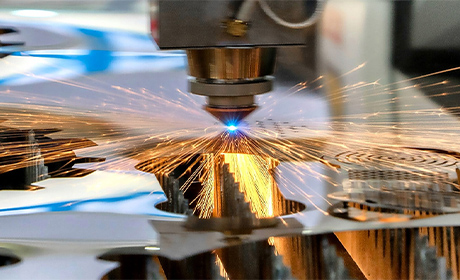
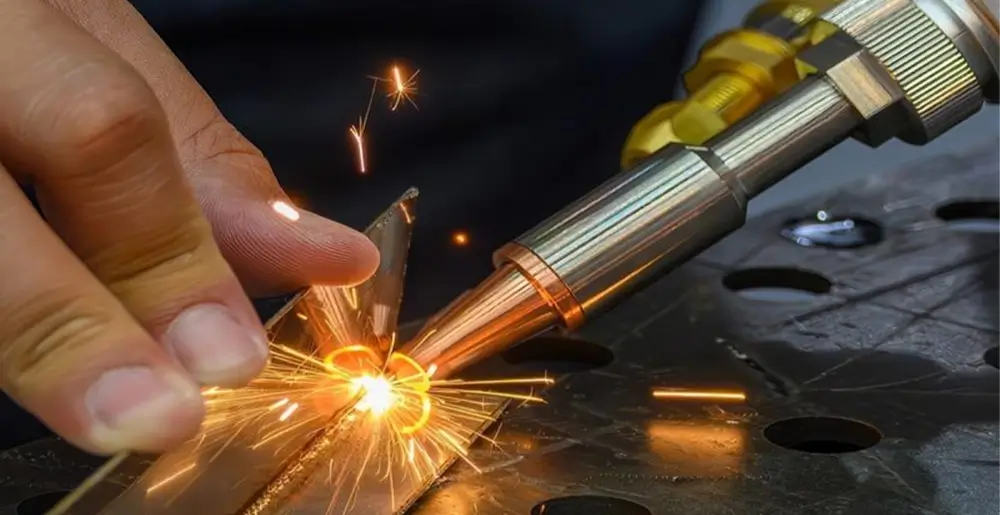
Stainless steel is ubiquitous in industries like food processing, aerospace, marine engineering, and medical device manufacturing—thanks to its exceptional corrosion resistance and mechanical strength. Laser welding has emerged as the preferred joining method for stainless steel, offering precision, minimal distortion, and high efficiency. However, its low heat input and high cooling rate double-edged sword: improper process control can lead to metallurgical defects (e.g., porosity, cracking, unbalanced phases) that compromise weld integrity and corrosion resistance.
Heat Input Control: Balance Low Input & Full Fusion
Laser welding’s core advantage lies in low heat input, but striking the right balance is critical—too low causes fusion failures, too high leads to distortion and sensitization.
Why Low Heat Input Works for Stainless Steel
- Minimizes distortion and residual stress: Critical for thin austenitic stainless steel (e.g., 304, 316L) with high thermal expansion, preventing warping in precision components like food processing equipment.
- Reduces heat tint and oxide formation: Eliminates the need for extensive post-weld cleaning (e.g., pickling, passivation) in hygiene-sensitive industries (pharmaceuticals, medical devices).
- Preserves corrosion resistance: Avoids chromium carbide precipitation (sensitization) in austenitic grades, which weakens resistance to pitting and crevice corrosion.
Risks of Excessively Low Heat Input
- Incomplete penetration and lack of fusion: Common in thick sections (>3mm) or when welding dissimilar stainless steel grades.
- Increased porosity: Rapid solidification traps gases (argon, nitrogen) in the weld pool, especially problematic for pressure vessels.
- Brittle microstructures: Ultra-fast cooling pushes some grades (e.g., duplex 2205) toward unbalanced phases, reducing impact toughness.
Practical Control Levers & Parameters
- Laser Power (W): 500–3000W for thin sheets (0.5–3mm); 3000–6000W for thick sections (3–10mm). Higher power deepens penetration but requires slower travel speed to avoid overheating.
- Travel Speed (mm/s): 5–20 mm/s for full fusion in 1–3mm austenitic steel; 2–8 mm/s for duplex grades. Faster speeds reduce heat input but demand precise beam focus.
- Spot Size (mm): 0.2–0.6mm for concentrated energy (deep penetration); 0.6–1.0mm for broader beads (reduced distortion in thin sheets).
Energy per Unit Length (J/mm): The key metric—aim for 30–60 J/mm for thin austenitic stainless steel; 60–100 J/mm for duplex stainless steel (balances fusion and phase transformation).
Case Example: A manufacturer of 304 stainless steel food processing tanks reduced weld distortion by 40% by optimizing heat input to 45 J/mm (1500W power + 10 mm/s travel speed), eliminating post-weld straightening.
Ferrite Control in Austenitic Stainless Steel Welds
Austenitic stainless steel (304, 316L, 321) is prone to solidification cracking—controlling ferrite content (3–8%) is the key to mitigation.
Metallurgical Background
- Fully austenitic microstructures lack the ability to absorb low-melting-point impurities (sulfur, phosphorus) at grain boundaries, leading to hot cracking during welding.
- Delta ferrite (3–8%) acts as a “sink” for these impurities, preventing crack formation while maintaining corrosion resistance.
Laser-Specific Risks
Laser welding’s high cooling rate freezes the solidification structure before ferrite can form, increasing cracking risk—especially in lean austenitic grades (e.g., 304L with low nickel content).
Proven Control Methods
- Use Over-Alloyed Fillers: ER308L (higher chromium/nickel) or ER316L fillers promote ferrite formation, even with fast cooling.
- Adjust Welding Parameters: Avoid excessively high travel speeds (>15 mm/s) for sensitive grades; slightly increase heat input to slow solidification.
- Verify Ferrite Content: Use a portable ferritscope for critical applications (food-grade, cryogenic, or marine service) to ensure 3–8% ferrite—avoiding both cracking (<3%) and reduced corrosion resistance (>8%).
Interpass Temperature & Preheat: Avoid Sensitization & Cracking
Proper temperature control prevents microstructural degradation, especially for heat-sensitive stainless steel grades.
Interpass Temperature Guidelines
- Austenitic Stainless Steel (304, 316L): Keep interpass temperature <150°C to prevent chromium carbide precipitation (sensitization). Sensitization creates a “chromium-depleted zone” around grain boundaries, lowering corrosion resistance.
- Duplex Stainless Steel (2205, 2507): Maintain interpass temperature <150°C to avoid sigma phase formation (brittle intermetallic compound) and preserve the 50/50 ferrite-austenite balance.
- Laser-Specific Note: Single-pass laser welds rarely exceed 150°C, but multipass hybrid laser-arc welds (thick sections >10mm) risk heat accumulation—use forced air cooling between passes.
Preheat Requirements
- Austenitic/Duplex Grades: Preheat is rarely needed (room temperature is sufficient) unless welding thick sections (>12mm) or highly restrained components.
- Martensitic (410, 420) & Precipitation-Hardening (17-4 PH) Grades: Preheat to 100–300°C to avoid quench cracking and hardness spikes in the heat-affected zone (HAZ). Preheat must be uniform to prevent differential expansion.
Best Practice: Use infrared temperature sensors to monitor interpass and preheat temperatures—critical for compliance in ASME BPVC Section VIII (pressure vessels) and FDA regulations (food/medical).
Duplex Stainless Steel: Maintaining Ferrite-Austenite Balance
Duplex stainless steel (2205, 2507) offers superior strength and corrosion resistance—but requires precise heat input control to preserve its 50/50 ferrite-austenite phase balance.
Laser Welding Risks
Excess Ferrite (>65%): High cooling rates lock in ferrite, reducing impact toughness (especially at low temperatures) and pitting corrosion resistance.
Incomplete Austenite Reformation: Overheating causes grain growth and incomplete phase transformation, leading to inconsistent mechanical properties.
Targeted Control Strategies
- Use Ni-Rich Fillers: ER2209 filler metal (higher nickel content) promotes austenite formation, offsetting the ferrite-stabilizing effect of fast cooling.
- Optimize Heat Input: Slightly increase heat input (60–100 J/mm) compared to austenitic welding—slows cooling enough for phase transformation without grain growth.
- Limit Interpass Temperature: Keep <150°C to prevent sigma phase formation (brittle, reduces ductility) and maintain phase balance.
- Post-Weld Verification: For offshore, desalination, or chemical processing applications, test ferrite content with a ferritscope and perform impact toughness tests (Charpy V-notch) to ensure compliance.
Key Takeaways for Stainless Steel Laser Welding Success
Laser welding stainless steel is a metallurgical precision game—success depends on controlling heat input, cooling rate, and phase balance:
- Heat input is a tool: Aim for the minimum energy needed for full fusion (30–100 J/mm) to avoid distortion and sensitization.
- Ferrite is critical for austenitic steel: Maintain 3–8% ferrite with over-alloyed fillers and optimized parameters to prevent cracking.
- Temperature control is non-negotiable: Keep interpass temperature <150°C for austenitic/duplex grades; preheat martensitic/PH grades to 100–300°C.
Duplex steel needs balance: Use Ni-rich fillers and moderate heat input to preserve 50/50 ferrite-austenite phase.
By aligning laser parameters (power, travel speed, spot size) with stainless steel grade properties and application requirements, you can produce welds with exceptional strength, corrosion resistance, and dimensional accuracy—critical for high-performance industries like aerospace, marine, and medical manufacturing.